ORNL uses advanced modeling, simulation and high-performance computing to help utilities, reactor developers and regulators evaluate reactor performance, safety and licensing before construction begins. These capabilities support power uprates for today's nuclear fleet and help advance next-generation reactor designs toward deployment.
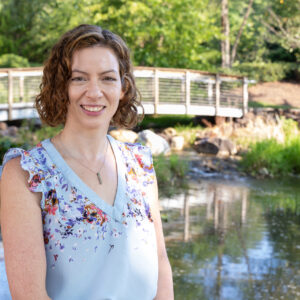
Caleigh Samuels of ORNL has received the 2026 Elda E. Anderson Award from the Health Physics Society for her research excellence and contributions to radiation protection. She leads radiation dosimetry efforts at ORNL's Center for Radiation Protection Knowledge and supports national and international radiation safety initiatives.
Six entrepreneurs have been selected for the next cohort of Innovation Crossroads, a Department of Energy Lab-Embedded Entrepreneurship Program node based at Oak Ridge National Laboratory. The program provides energy-related startup founders from across the nation with access to ORNL’s researchers, facilities and technical expertise, as well as connect them with experts, mentors and networks to accelerate their efforts to take their promising ideas to the marketplace.
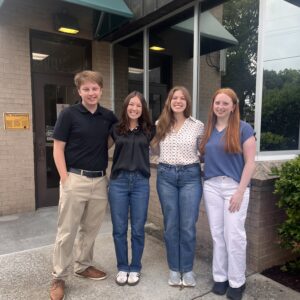
Four summer interns at Oak Ridge National Laboratory have varied career goals, but they're finding the hands-on experiences they need under the same mentor and her group.
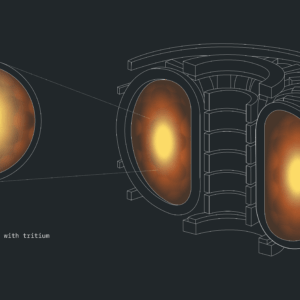
Researchers from ORNL, Cleveland Clinic and IBM demonstrated how quantum-centric supercomputing can model the complex chemistry of molten salts used in fusion reactors, helping solve a key challenge in producing tritium fuel. Their hybrid quantum, AI, and classical computing approach could accelerate the development of self-sustaining fusion power by improving the design and testing of reactor materials before physical experiments.
Sam Hurst was a pioneering ORNL physicist and inventor who helped develop resistive touchscreen technology, laying the foundation for the touchscreens used in modern devices. He earned more than 30 patents, founded four companies, and played a key role in strengthening the long-standing partnership between ORNL and the University of Tennessee.
Bryan Conry, a postdoctoral researcher at ORNL, represented ORNL at the Department of Energy’s 2026 National Lab Research SLAM, where he explained his research on TRISO nuclear fuel in a three-minute presentation for policymakers, stakeholders and the public. Conry highlighted how his work uses X-ray computed tomography to study fuel particles without damaging them and said the competition strengthened his science communication skills by helping him connect technical research to real-world impact.
Physicists at the University of Tennessee, Knoxville and researchers at ORNL have made critical measurements of the lifetime and decay energy of tellurium-104, an important step in answering a century-old question and understanding how hundreds
Leaders from government, industry and research institutions, including ORNL, gathered at the Tennessee Valley Corridor National Summit to discuss how advances in artificial intelligence, quantum technology and energy can strengthen the region's
ORNL researchers are testing advanced nuclear fuels under simulated accident conditions to generate the safety data needed for regulatory approval. Their work helps existing reactors operate more efficiently, produce more power, and support growing U.S. energy demand.
ORNL scientists partnered with Kingston Elementary School to host a Nuclear Day, introducing fifth-grade students to nuclear science through hands-on activities and interactive demonstrations. The event engaged students in topics such as radiation, uranium enrichment, nuclear reactors and chain reactions, inspiring curiosity about STEM careers and highlighting the role of nuclear science in everyday life.
ORNL researchers combined the SAMMY code with VENUS neutron imaging to identify nuclear materials without damaging them. The method uses precise data and modeling to distinguish complex isotopes. Tests on gold, tantalum and hafnium showed it can accurately match nuclear “fingerprints.”