The Terrestrial Ecosystem Sciences Scientific Focus Area (TES SFA) at Oak Ridge National Laboratory studies how land ecosystems work and how they respond to changing environmental conditions. Researchers examine how plants, soils, water, nutrients, and microbes interact to shape forests and other landscapes. By collecting field observations and improving computer models, TES SFA scientists help build better predictions about how ecosystems may change and how those changes could affect important systems such as energy production, water resources, and critical infrastructure. This research helps communities, industries, and decision-makers better prepare for environmental challenges that could impact the nation’s economy and security.
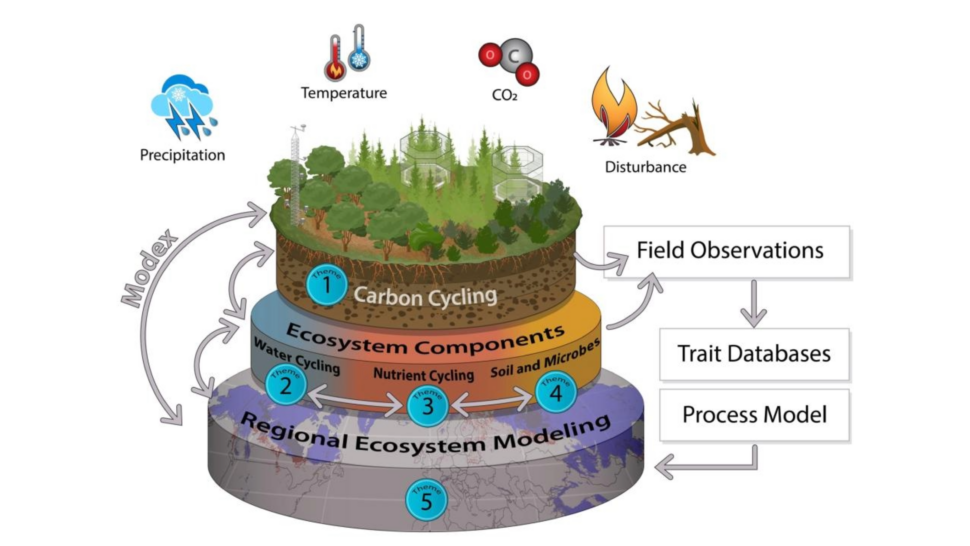
Terrestrial ecosystems underpin the nation’s food, fiber, fuel and water resources, making them foundational to America’s energy security, infrastructure stability, and economic prosperity. Scientists use Earth system models to predict how ecosystems will respond. Today’s models project that complex feedbacks above and belowground will respond differently across biomes, but the biological and biogeochemical mechanisms driving these responses are not fully understood. The result: wide variability among model projections, limited Earth system predictability and increased uncertainty in forecasting impacts to U.S. infrastructure, energy systems, and communities. Without improved predictive capability, adaptation and resilience strategies nationwide are constrained.
The TES SFA focuses on ecosystems subject to water, energy, and nutrient constraints whose impacts are highly uncertain in ESM predictions. Key areas of uncertainty include the responses of cold and water-logged peatlands, as in the Spruce and Peatland Responses Under Changing Environments (SPRUCE) experiment near Bovey Minnesota (Theme 1). At the other end of the spectrum, the responses of ecosystems on the ecotone between energy- and water-limited regions are also not well represented in models. In transition zones exemplified by the Missouri Ozarks AmeriFlux (MOFLUX) observational site near Ashland Missouri, plant species may experience extremely dynamic processes of mortality, natality, and growth (Theme 2). Belowground microbial and nutrient biogeochemical cycling (Themes 3 and 4) are also not well understood, and impart significant limitations on aboveground ecosystem structural and functional responses to changing environments in both experimental sites. Theme 5 uses artificial intelligence and machine learning approaches and Earth system models such as DOE’s E3SM Land Model to represent processes at SPRUCE and MOFLUX, and to scale those processes across the region and beyond.
The TES SFA features two trait databases and one observational site to improve the understanding and modeling of terrestrial ecology across the ecological community.
- LeafWeb collects and makes available plant photosynthesis data.
- Fine Root Ecology Database (FRED) which collects and makes available root trait data.
- The SFA also features direct measurements of plant traits at The Morton Arboretum.
Open Science
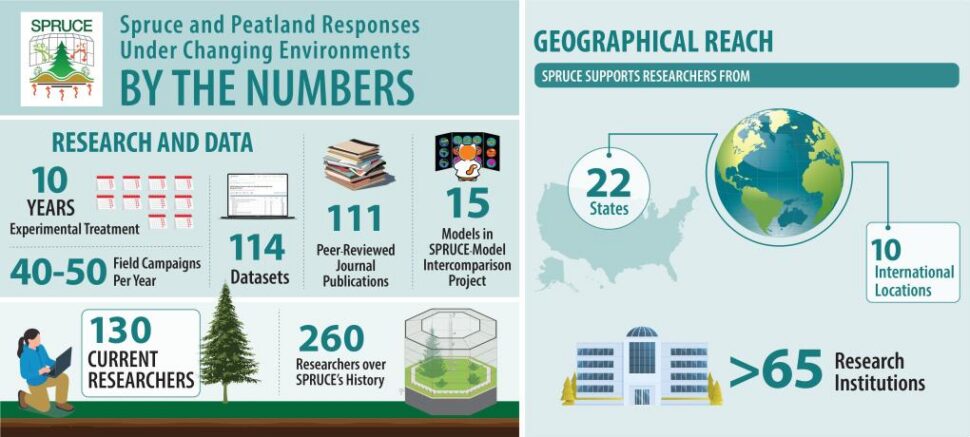
The TES SFA believes in open science and seeks to provide an outstanding example for our US DOE sponsor and for the scientific community. The SFA’s Spruce and Peatland Responses Under Changing Environments (SPRUCE) experiment, in its decadal run, attracted over 260 researchers from over 65 research institutions from 22 US states and 10 international locations.
The TES SFA believes in open science and seeks to provide an outstanding example for our US DOE sponsor and for the scientific community. The SFA’s Spruce and Peatland Responses Under Changing Environments (SPRUCE) experiment, in its decadal run, attracted over 260 researchers from over 65 research institutions from 22 US states and 10 international locations.
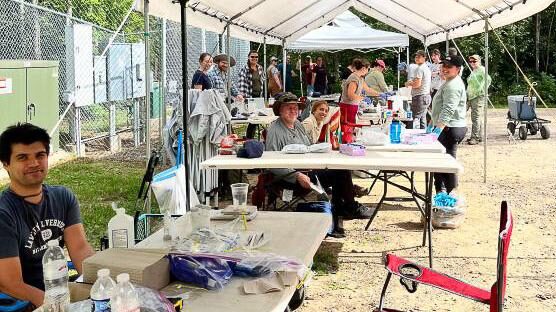
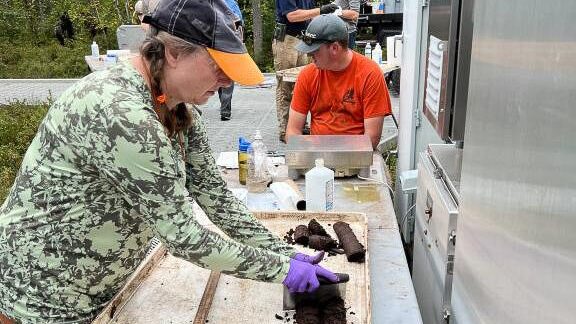
The yearly peat coring campaign typically involves researchers from over 10 different institutions. Cores are collected, documented, and sectioned to distribute among the team, to facilitate answering a diversity of scientific questions through a variety of analytical approaches. The success of the TES SFA’s inclusive approach in the SPRUCE experiment can be measured by the growing list of publications and datasets, now each numbering over 100.
The team follows DOE policy to make data publicly available through a portal at the DOE ESS-DIVE. Our Code of Conduct provides guidelines to ensure fair and equitable engagement within the scientific team and with external collaborators. Our authorship policy is designed to ensure contributors can secure authorship on datasets and manuscripts in accordance with the Contributor Role Taxonomy (CRediT). The SPRUCE experiment maintains a running list of manuscripts in preparation to provide continual engagement opportunities.
Contact