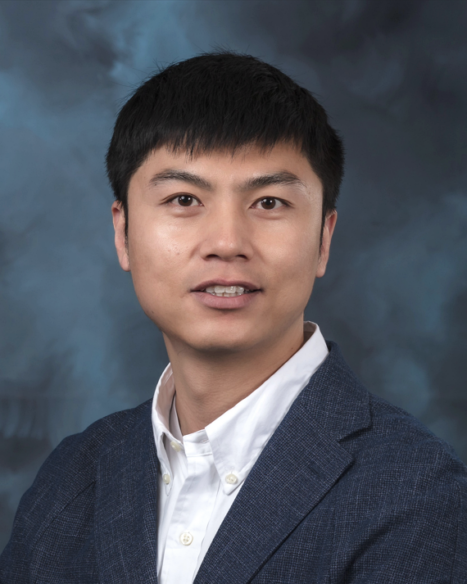
Huan Zhao is a Wigner Distinguished Staff Fellow (Staff Scientist) at Oak Ridge National Laboratory (ORNL). His research interests encompass spin-based quantum sensing, solid-state quantum light sources, optical imaging, and microelectronics. At ORNL, Huan’s recent work focuses on Nitrogen-Vacancy (NV) Magnetometer/Microscope and advanced optical imaging. Prior to joining ORNL, Huan was a Director’s Postdoctoral Fellow at Los Alamos National Laboratory (LANL) and a research associate at California Institute of Technology (Caltech). He earned his Ph.D. in Electrical Engineering from the University of Southern California (USC) in December, 2019.
Hiring: Huan is seeking graduate-level student paid interns (salary ~$4800 per month). Interested candidates are encouraged to contact Huan directly.
Current Projects
PI, for LDRD project “Telecom Quantum Emitters for Quantum Networks.” The project, with total funding $722.5k, aims at developing cutting-edge solid-state quantum light sources, specifically tailored for critical roles in quantum information science. Huan’s focus includes the creation of bright, site-specific, and polarization-defined telecom-wavelength quantum emitters, their integration with photonic structures, and the construction of spin-photon interfaces for quantum state transduction. Through this project, Huan will set up sophisticated near-infrared optical imaging, correlation measurements and spectroscopy capabilities, focusing on characterizing individual quantum light sources.
Technical contact, for Scanning NV Microscope. The Scanning NV Microscope combines a tiny quantum sensor (NV center) with an Atomic Force Microscope (AFM) to simultaneously measure the sample’s topography and its surface magnetic fields with nanoscale resolution. This advanced tool operates at temperatures ranging from 2K to 300K. Those interested in this technology are encouraged to submit a user proposal to CNMS at https://www.ornl.gov/facility/cnms/for-users/user-program-overview. For further information or detailed discussions, please reach out to Huan directly. Huan currently has 22 groups of active users from diverse research backgrounds.
co-PI, for LDRD project “Quantum Sensing of Entangled Chiral Excitations“. In this $1.2M project, Huan will collaborate with Dr. Hu Miao’s team to develop macroscopic and microscopic quantum sensing probes to enable the detection and characterization of long-range entangled quantum states in chiral quantum materials. By experimentally determining the angular momentum of chiral excitations and imaging charge-neutral topological edge modes, this research will pioneer a new experimental paradigm for identifying topological and entangled phases and establish the foundation for manipulating topological qubits in quantum computing architectures.
co-PI, for LDRD project “Reconfigurable Quantum Networking with Wavelength-Multiplexed Single-Photon Emitters“. In this $1.2M project, Huan focuses on developing single-photon emitters (SPEs) in the visible spectral range with optimized emissive properties. In collaboration with Dr. Hsuan-Hao Lu’s team, Huan conducts quantum frequency conversion to shift the operating wavelength of the SPEs to the telecom band, and demonstrate real-world quantum networking applications across ORNL’s campus fiber network.
co-PI, for LDRD project “Co-design of Entanglement-Enhanced Quantum Sensing Protocols“. In this $1.6M project, Huan and his postdocs collaborate with quantum theorists from Dr. Yan Wang’s team to enhance quantum sensing performance by entangling the electron spin of diamond NV centers with nuclear spins. They will establish the hardware necessary for entanglement-enhanced sensing using ensemble NV centers.
Previous Projects
Huan has a diverse research background, with a bachelor’s degree in physics, a Ph.D. in electrical and computer engineering, and postdoctoral experience in medical engineering, all of which have shaped his wide-ranging research interests. Before joining ORNL, Huan actively contributed to various research fields. (links of Huan’s 1st-author/ corresponding author publications are attached):
1. 2D Material-based Telecom-Wavelength Quantum Light Sources: Demonstrated the first 2D-material-based quantum light source suitable for telecom wavelengths (1.3 um O-band & 1.55 um C-band).
Nature communications 12.1 (2021): 6753; Nano Lett. 2023, 23, 23; ACS Nano 2025; Nanophotonics 0 (2025)
2. Birefringent Optical Materials: Studied the optical properties of various birefringent optical materials, including the discovery of a material that exhibits the highest known broadband birefringence.
Nano Res. 8, 3651–3661 (2015); Nat. Photon. 12, 392–396 (2018); Chem. Mater. 2018, 30, 15, 4897
3. Resistive Memory Device for Neuromorphic Systems: Pioneered the creation of the world’s most energy-efficient resistive memory device (RRAM, also called memristor), which is promising for neuromorphic computing.
Advanced Materials 29.47 (2017): 1703232; arXiv:1905.04431.
4, Study of Material Properties and Light-matter Interactions :Investigated the light-matter interactions of various novel materials, including the investigations of excitons, phonons, polaritons, hot carriers, etc using optical spectroscopy, pump-probe technique, and electrical measurements. Studied the mechanical engineering of 2D layered materials, including stacking, strain engineering, folding, etc.
Nano Lett. 2017, 17, 6, 3675–3680; (Collaboration with late Prof. Ahmed Zewail, “father of femtochemistry” and Nobel laureate)
Advanced Optical Materials (2016), 4: 756-762. Adv. Funct. Mater. 2020, 30, 1908691.
Nanophotonics, 4,2, 2015, 128-142;
About Wigner Distinguished Staff Fellowship
See https://www.ornl.gov/careers/distinguished-fellowships for a detailed description of the program.
Named in honor of Eugene Wigner, a 1963 Nobel Laureate and the first Director of Research and Development at ORNL, the Wigner Fellowship is ORNL’s most longstanding fellowship and most prestigious staff fellowship for early-career researchers. The Wigner distinguished staff fellowship is awarded to ~2 outstanding early-career scientists each year, offering them a chance to enhance their scientific expertise, develop a long-term career at ORNL, and build their research portfolios. Fellows are hired as independent, “permanent” research staff, similar to endowed assistant professorship at a university.


