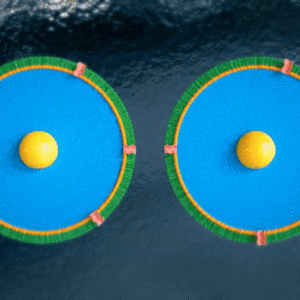
Kairos Power announced the Nuclear Center for Advanced Manufacturing and Precast, an initiative focused on maturing new manufacturing and construction methods and developing vocational training for skilled workers in East Tennessee to support the deployment of advanced nuclear reactors.
ORNL’s seventh annual Quantum Computing User Forum brought together 184 researchers, developers and industry leaders to showcase advances in quantum applications, software, and hybrid quantum-HPC computing enabled through QCUP. The event also strengthened collaborations across the quantum community and highlighted ORNL’s role in developing the technologies, software ecosystem and workforce needed to make quantum computing a practical tool for scientific discovery.
ORNL and KVA Stainless completed a DOE-funded study validating the performance of welded Grade 91 steel for use in high-temperature energy systems. The results will help KVA refine its advanced welding technology and support the development of durable materials for future fission and fusion reactors.
Oak Ridge National Laboratory is advancing nuclear battery technology to provide reliable, long-lasting power for remote and extreme environments, from deep space to national security applications. ORNL researchers are exploring new radioisotope fuels, more efficient energy conversion, improved thermal management and advanced manufacturing to make nuclear batteries safer, more efficient and easier to deploy.
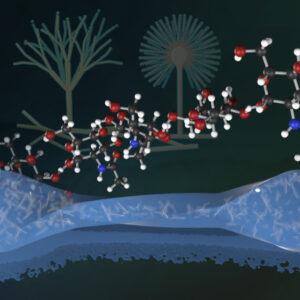
ORNL researchers found that lipid bilayers, the basic structure of cell membranes, can exhibit electrical behaviors associated with learning and memory. The discovery could advance brain-inspired computing technologies and provide new insights into neurological disorders.
ORNL employees volunteered with Second Harvest Food Bank of East Tennessee to pack 8,000 weekend food bags for children experiencing food insecurity through the Food for Kids program. The event is part of ORNL Gives, the laboratory’s annual employee giving and volunteer campaign, and builds on a partnership with Second Harvest that has supported East Tennessee communities for more than 20 years.
Researchers at ORNL and the University of Tennessee, Knoxville, have made a scientific advance by using a natural substance from fungi, called chitin, to create hydrogels that are both significantly stronger and tougher. This new material could lead to safer medical devices, longer-lasting coatings and other innovations that improve everyday technology and health care.
Oak Ridge National Laboratory has resumed production of W-188/Re-188 generators, which provide the radioactive isotope Re-188 for medical research. Vanderbilt researchers used an updated ORNL generator to test a Re-188-based treatment for prostate cancer in mice, with preliminary results described as promising.
Researchers at ORNL and the University of Tennessee, Knoxville, demonstrated an AI-driven workflow that guided data collection in real time during a beamline experiment at Cornell University's CHESS facility. The approach allowed the AI to adjust measurements as data was collected, advancing autonomous scientific research and supporting DOE's Genesis Mission.
Rigoberto "Gobet" Advincula, a Governor's Chair Professor jointly appointed at ORNL and the University of Tennessee, has been named a 2026 Fellow of the American Chemical Society's Industrial & Engineering Chemistry Division.
ORNL has developed a new californium-252 processing method that reduces separation time by about a week while maintaining the same quality. As the only producer of californium-252 in the western world, ORNL is also increasing production to meet growing demand for the isotope.
Using neutrons at ORNL, researchers from The Ohio State University are studying residual stress caused by friction stir welding to reveal how to strengthen armor steel welds, like those used in military vehicles. The team’s results will help fine-tune welding parameters to create a roadmap for engineering better armor systems. They brought their research to ORNL’s HFIR due to the facility’s neutron production capabilities.