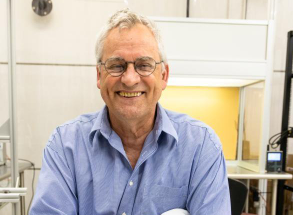
John Lajoie, a physicist at ORNL, develops advanced particle detectors that help scientists study the fundamental structure of matter while often enabling innovations in other scientific fields. As spokesperson for the ePIC Collaboration, he is helping design the detector for the future Electron-Ion Collider, which will use cutting-edge detector technology, streaming data, and AI to explore how quarks and gluons shape protons, neutrons, and nuclear matter.
Maria Mahbub, an ORNL research associate, develops trustworthy AI methods for healthcare, national security and drone detection, with a focus on improving AI reliability and robustness. Her work combines machine learning with domain expertise to help ensure AI systems perform accurately and reliably in real-world applications.
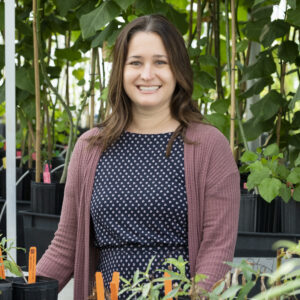
Mengjun Shu, a scientist at Oak Ridge National Laboratory, uses big data, statistical modeling and artificial intelligence to study how trees respond to environmental stress and identify traits that can improve biomass crops such as poplar. Her research combines genetics, plant imaging and microbial studies to advance biotechnology for U.S. manufacturing and agriculture while helping scientists better understand tree resilience.
David Radford has built his career on helping his fellow scientists see what would otherwise remain invisible. A nuclear physicist at the U.S. Department of Energy’s Oak Ridge National Laboratory, Radford specializes in creating exquisitely sensitive detectors to peer into the mysteries of the atomic nucleus, thereby illuminating the nature of matter.
Sam Hurst was a pioneering ORNL physicist and inventor who helped develop resistive touchscreen technology, laying the foundation for the touchscreens used in modern devices. He earned more than 30 patents, founded four companies, and played a key role in strengthening the long-standing partnership between ORNL and the University of Tennessee.
Melissa Cregger discusses how ORNL’s Center for Bioenergy Innovation is developing fast-growing, resilient bioenergy crops such as poplar, switchgrass, pine, and eucalyptus to support sustainable production of fuels, chemicals, and materials. She highlights breakthroughs like the high-yield “Booster” gene and explains how AI, automation, and advanced phenotyping are accelerating the discovery and development of improved feedstocks for real-world growing conditions.
Jillene Sennon-Greene’s interest in radioisotopes began while working in veterinary medicine, where she saw how isotopes helped diagnose and treat animals, including a lioness with a hormone disorder. Now at ORNL, she oversees production of actinium-225, a promising radioisotope used in targeted cancer therapies, helping advance treatments that could improve and save lives. Her work combines scientific leadership with a personal passion for making a meaningful impact in cancer care.
Robert Stewart turned a childhood fascination with maps and computers into a career at ORNL developing geospatial and AI tools for environmental cleanup and human security. His work has influenced nuclear remediation practices and supported efforts credited with saving lives. Today, he focuses on mentoring future scientists and advancing data-driven research at ORNL.
Ross E. Blevins, a 98-year-old veteran and nuclear researcher, contributed to early nuclear science at Oak Ridge National Laboratory and later helped develop TVA’s first nuclear power plants. In 2026, he returned to ORNL to reflect on his remarkable career and experiences.
Yongtao Liu is an R&D staff member at Oak Ridge National Laboratory’s Center for Nanophase Materials Sciences (CNMS). In the Data NanoAnalytics Group, he is helping nanomaterials research move toward experiments that can run with far less handholding.
Nina Gottschling is a Wigner Fellow at ORNL whose research focuses on uncertainty quantification, inverse problems, and photonic quantum computing, with an emphasis on mathematical accuracy bounds for AI and scientific computing. She bridges rigorous mathematics, simulation and experiment to advance computational and quantum technologies.
Sean Turner, a senior engineer at ORNL, uses large-sample deep learning and hydrology models to predict river temperatures nationwide and assess their impacts on interconnected hydropower and nuclear operations, despite limited observational data. His work focuses on integrating river and power grid models to improve energy reliability, inform infrastructure siting and support water–energy decision-making.