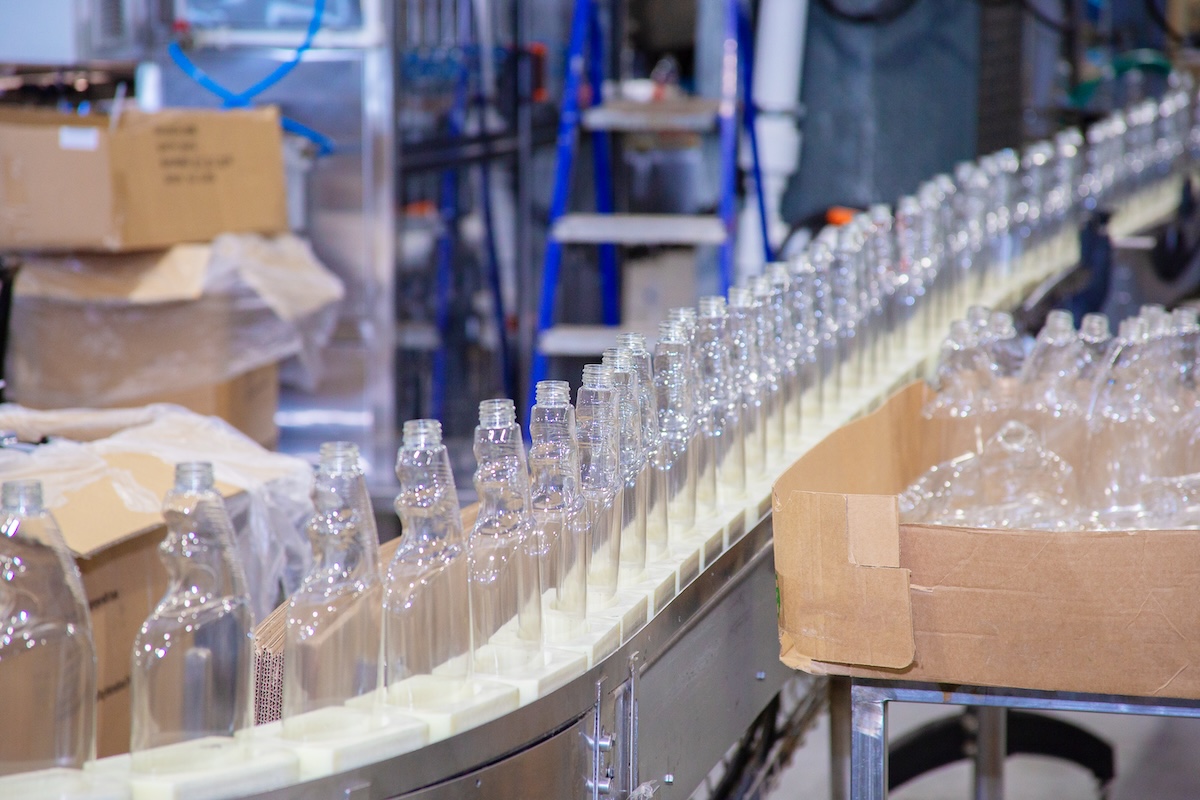
Manufacturers using cellulose fiber-reinforced polymer composites often face production slowdowns due to the limited thermal stability of cellulose-based materials during high-temperature processing. ORNL has developed a composite formulation that improves both thermal stability and processability, enabling cellulose-reinforced olefin materials to be manufactured at throughput rates comparable to conventional formulations. The technology supports more efficient production of molded consumer and industrial products while maintaining desirable processing characteristics under elevated manufacturing temperatures.
Description
ORNL developed an advanced composite formulation designed to improve the thermal performance and manufacturability of cellulose fiber-reinforced olefin polymers. Conventional cellulose-based composites can degrade under elevated processing temperatures, requiring slower production conditions that increase manufacturing costs and limit commercial scalability.
The new formulation incorporates a specialized combination of stabilizing and processing-enhancing additives that significantly improve resistance to thermal degradation while maintaining favorable material flow properties during manufacturing. Testing demonstrated substantial improvements in oxidative stability and viscosity performance at elevated processing temperatures compared with conventional polyethylene formulations and untreated cellulose composites.
The technology enables higher cellulose-loading composite materials to be processed using commercially competitive manufacturing rates without sacrificing processing consistency. The formulation is compatible with common polymer processing methods and may support production of a variety of molded household and consumer products.
Benefits
- Improves thermal stability during high-temperature manufacturing
- Enables production throughput rates comparable to standard polymer formulations
- Enhances processability of cellulose-reinforced composites
- Supports higher cellulose fiber loading while maintaining favorable flow properties
- Reduces manufacturing constraints associated with cellulose-based materials
Applications and Industries
- Household and consumer product manufacturing
- Polymer and plastics processing
- Injection molding and extrusion operations
- Composite materials manufacturing
- Packaging and durable goods production
Contact
To learn more about this technology, email [email protected] or call 865-574-1051.




Contact
To learn more about this technology, email [email protected] or call 865-574-1051.