ORNL researchers have developed a hybrid manufacturing method that combines 3D printing and electroforming to create leak-free HIP cans for advanced nuclear reactor components. The approach could simplify production of complex metal parts, reduce costs and reliance on overseas manufacturing, and strengthen U.S. supply chains for nuclear energy and defense applications.
Researchers at ORNL developed a high-performance computing and physics-based modeling framework that predicts how large-scale lithium-ion battery systems age under different grid operating conditions. The tool helps optimize battery design and operation to extend system lifespan, reduce costs, and improve the performance of grid-scale energy storage before deployment.
Researchers at ORNL developed a new electric motor drive design that reduces excess heat, electrical noise and component wear without requiring additional hardware. Simulations showed a 90% reduction in neutral-point voltage fluctuations and a 43% decrease in current stress on capacitors, improving reliability for high-power transportation applications.
ORNL has licensed its Cyber Grid Guard technology to GridForge Energy Solutions to commercialize a blockchain-based platform that detects cyber threats and verifies grid data in real time, helping improve grid reliability, security, and transparency.
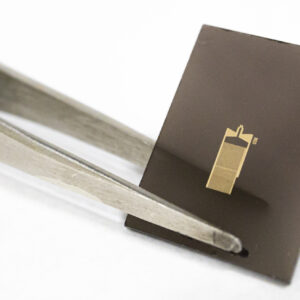
ORNL researchers developed a compact, high-efficiency power converter using gallium nitride semiconductors instead of traditional silicon. The new technology switches electricity faster with less energy loss, making converters smaller, lighter and more affordable. Researchers say the converters could help meet growing power demands in AI data centers, where large numbers of efficient converters are needed for servers.
ORNL researcher Vivek Sujan was named Inventor of the Year for his contributions to advanced mobility and energy technologies. His work has helped improve vehicle efficiency, power systems and transportation innovation. Sujan was recognized at Battelle’s Celebration of Solvers in May.
A research agreement between ORNL and Louisiana State University will accelerate energy generation and critical materials manufacturing and enhance job growth in the fuel and chemical industries, particularly in the Gulf Coast region.
Witching Hour, a hard tech startup and member of Cohort 2025 of Innovation Crossroads, is wielding the support of ORNL to develop technology that reduces wildfire risk by retrofitting powerlines with insulation in fire-prone areas. ORNL is the site of the Powerline Conductor Accelerated Testing Facility, one of the only facilities in the country where companies can try out new transmission line technologies for long time periods in a real-world environment.
Six researchers from the ORNL’s Energy Science and Technology Directorate have been elevated to Senior Member status by the Institute of Electrical and Electronics Engineers (IEEE).
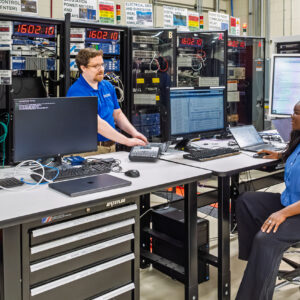
A historic legacy now translates to pioneering capabilities in electric grid technology at ORNL. The secure electrical infrastructure that enabled World War II nuclear advances under the Manhattan Project has evolved into the ideal test bed for modernizing the nation’s grid for the 21st century. ORNL’s Grid Research Innovation and Development Center uses the lab’s electric grid to prove innovations for smooth transition to industry with minimal risk.
A method developed at Oak Ridge National Laboratory to print high-fidelity, passive sensors for energy applications can reduce the cost of monitoring critical power grid assets.
Philip Bingham has two pieces of advice for researchers new to Oak Ridge National Laboratory: (1) develop a skill set that can be applied to multiple research areas, and (2) get out and meet folks across the lab. “The favorite part of my work is that I’ve done a lot of very diffe...