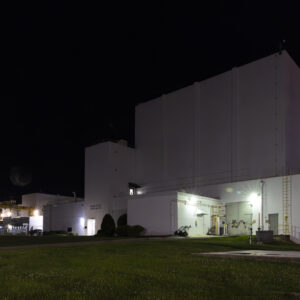
ORNL’s High Flux Isotope Reactor offers flexible testing, advanced instrumentation and on-site facilities to accelerate nuclear fuel development. Its capabilities provide critical data needed to qualify new fuels and support advanced reactor deployment.
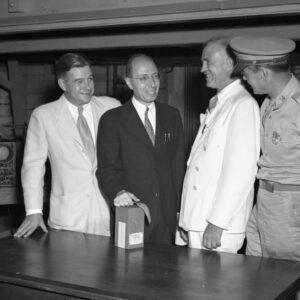
On Aug. 2, 1946, as newspaper reporters crowded the stage, scientists at Clinton Laboratories in Oak Ridge, Tennessee, made a ceremony of the very first official shipment of a reactor-created radioisotope. Carbon-14, a medical isotope, was sent to the Barnard Free Skin and Cancer Hospital in St. Louis, Missouri, from what would become the Department
Oak Ridge National Laboratory has resumed production of W-188/Re-188 generators, which provide the radioactive isotope Re-188 for medical research. Vanderbilt researchers used an updated ORNL generator to test a Re-188-based treatment for prostate cancer in mice, with preliminary results described as promising.
ORNL has developed a new californium-252 processing method that reduces separation time by about a week while maintaining the same quality. As the only producer of californium-252 in the western world, ORNL is also increasing production to meet growing demand for the isotope.
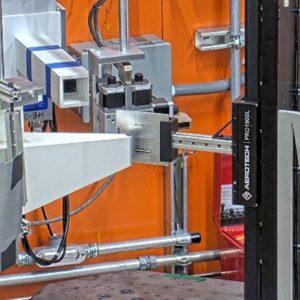
Using neutrons at ORNL, researchers from The Ohio State University are studying residual stress caused by friction stir welding to reveal how to strengthen armor steel welds, like those used in military vehicles. The team’s results will help fine-tune welding parameters to create a roadmap for engineering better armor systems. They brought their research to ORNL’s HFIR due to the facility’s neutron production capabilities.
Igor Remec of ORNL was named a Fellow of the American Nuclear Society, the organization’s highest honor, for his decades of contributions to nuclear safety, neutron science, and the development of ORNL’s Second Target Station.
ORNL’s High Flux Isotope Reactor runs around the clock, supporting global research and isotope production. The article highlights the small, dedicated teams, especially on night shifts, who keep operations safe and running smoothly. Despite the demands, the work is rewarding because of HFIR’s impact on science and technology.
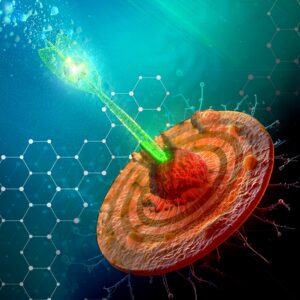
ORNL and University of Tennessee partners launched DART to develop targeted radiopharmaceutical therapies for ovarian cancer. The effort focuses on using alpha radiation to precisely destroy cancer cells while sparing healthy tissue. It also aims to grow Tennessee’s radiopharmaceutical research and workforce.
Ross E. Blevins, a 98-year-old veteran and nuclear researcher, contributed to early nuclear science at Oak Ridge National Laboratory and later helped develop TVA’s first nuclear power plants. In 2026, he returned to ORNL to reflect on his remarkable career and experiences.
As the U.S. reimagines its nuclear future, researchers at ORNL are experimenting with molten lead and next-generation materials to reinvent a classic reactor design for a new era of innovation. To evaluate the alloy’s performance in these conditions, researchers are testing AFA samples in eight small rabbit capsules encased in solid lead in ORNL’s High Flux Isotope Reactor.
Using neutrons at the Department of Energy’s Oak Ridge National Laboratory, researchers from The Ohio State University are pioneering the advancement of reliable welding techniques in outer space.
Leah Broussard, a research scientist in the Physics Division at ORNL, has received the inaugural DOE Distinguished Mentor Award for Workforce Development, recognizing scientists who guide and support the next generation of researchers.