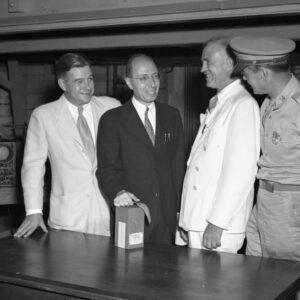
On Aug. 2, 1946, as newspaper reporters crowded the stage, scientists at Clinton Laboratories in Oak Ridge, Tennessee, made a ceremony of the very first official shipment of a reactor-created radioisotope. Carbon-14, a medical isotope, was sent to the Barnard Free Skin and Cancer Hospital in St. Louis, Missouri, from what would become the Department
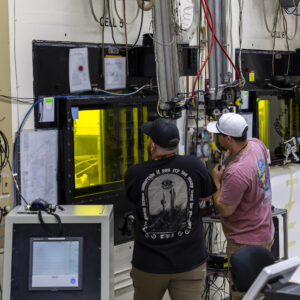
Teams at ORNL's Radiochemical Engineering Development Center operate 24/7 to produce and deliver critical isotopes for medicine, space exploration, industry and national security. Staff manage tight schedules, short-lived materials and strict safety requirements to ensure reliable, continuous operations.
It was the Navy that led Don Caverly to nuclear.It’s the variety − and the impact − of nuclear work that’s kept him in the field.“I never get bored here,” said Caverly, group leader for Radiochemical Engineering Development Center Hot Cell Operations in the Isotope Science and Enrichment Directorate’s Isotope Production and Manufacturing Division. “That’s a huge thing for me. If I don’t think I’m learning something, or if I get bored, that’s when I start looking for something else to do or making poor life choices. But here, there’s always something to do, always something to look forward to.”
Phil Ferguson came to ORNL in 2000 to work on a project he knew would change the world: the Spallation Neutron Source.Now, nearly 25 years later, Ferguson is overseeing four projects – each with the potential to move Oak Ridge National Laboratory’s mission forward and showcase the lab’s capacity for innovating isotope science and production and putting the United States in a position to dominate in supplying these critical isotopes.