Oak Ridge National Laboratory is advancing nuclear battery technology to provide reliable, long-lasting power for remote and extreme environments, from deep space to national security applications. ORNL researchers are exploring new radioisotope fuels, more efficient energy conversion, improved thermal management and advanced manufacturing to make nuclear batteries safer, more efficient and easier to deploy.
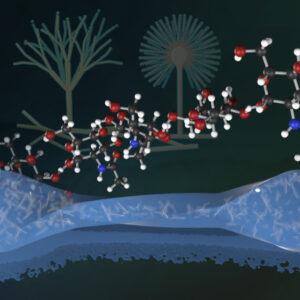
Researchers at ORNL and the University of Tennessee, Knoxville, have made a scientific advance by using a natural substance from fungi, called chitin, to create hydrogels that are both significantly stronger and tougher. This new material could lead to safer medical devices, longer-lasting coatings and other innovations that improve everyday technology and health care.
Behind every self-driving laboratory at ORNL is a team most people never see. Facilities and Operations workers are building and maintaining the infrastructure that makes autonomous science possible.
Researchers at ORNL’s Center for Nanophase Materials Sciences are developing autonomous workflows that combine advanced instruments, AI, simulations and theory to accelerate microelectronics research. These systems can interpret experimental data in real time, guide next steps during materials synthesis and analysis, and help scientists better understand and optimize next-generation materials for memory devices and transistors.
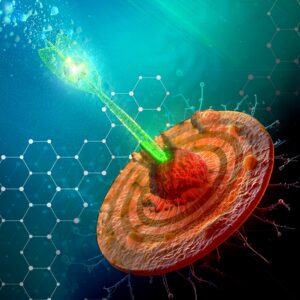
ORNL and University of Tennessee partners launched DART to develop targeted radiopharmaceutical therapies for ovarian cancer. The effort focuses on using alpha radiation to precisely destroy cancer cells while sparing healthy tissue. It also aims to grow Tennessee’s radiopharmaceutical research and workforce.
Researchers at ORNL developed a method to convert a commonly discarded hydrocarbon polymer into gasoline- and diesel-like fuels. The team has applied for a patent for the discovery, which treats polyethylene — the stuff of white cutting boards and shopping bags — with aluminum chloride-containing molten salts that serve as both solvent and catalyst. If scaled beyond the laboratory, the process could strengthen U.S. energy security and industrial competitiveness.
Researchers at ORNL have invented a reusable adhesive from waste polymers that is tougher than commercial glues, works underwater as well as in dry environments, and bonds a variety of materials. Inspired by the way mussels stick to surfaces, the innovative adhesive contains reversible chemical crosslinkers that allow the hardened glue to soften, detach and be reused.
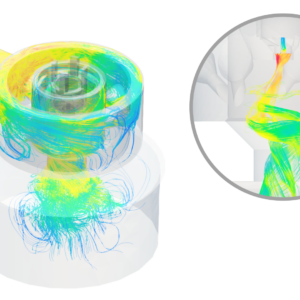
Researchers at the University of Maine and ORNL have combined insights into a new way to dry non-aggregated cellulose nanofiber. The innovation of producing these mini tornadoes to dry cellulose nanofibers is more energy efficient, effective and scalable than current drying methods.
Rigoberto “Gobet” Advincula, a polymer expert with joint appointments at the Department of Energy’s Oak Ridge National Laboratory and the University of Tennessee, Knoxville, has earned the George Stafford Whitby Award for Distinguished Teaching and Research, bestowed by the Rubber Division of the American Chemical Society.
Researchers at ORNL are pioneering the design and synthesis of quantum materials, which are central to discovery science involving synergies with quantum computation. These innovative materials, including magnetic compounds with honeycomb-patterned lattices, have the potential to host states of matter with exotic behavior.
Five breakthrough simulation projects conducted on the Frontier supercomputer at ORNL have been named finalists for the Association for Computing Machinery’s Gordon Bell Prize. Four of the projects are in the running for the main prize and one project is contending for a special prize.