John Lajoie, a physicist at ORNL, develops advanced particle detectors that help scientists study the fundamental structure of matter while often enabling innovations in other scientific fields. As spokesperson for the ePIC Collaboration, he is helping design the detector for the future Electron-Ion Collider, which will use cutting-edge detector technology, streaming data, and AI to explore how quarks and gluons shape protons, neutrons, and nuclear matter.
ORNL’s seventh annual Quantum Computing User Forum brought together 184 researchers, developers and industry leaders to showcase advances in quantum applications, software, and hybrid quantum-HPC computing enabled through QCUP. The event also strengthened collaborations across the quantum community and highlighted ORNL’s role in developing the technologies, software ecosystem and workforce needed to make quantum computing a practical tool for scientific discovery.
Maria Mahbub, an ORNL research associate, develops trustworthy AI methods for healthcare, national security and drone detection, with a focus on improving AI reliability and robustness. Her work combines machine learning with domain expertise to help ensure AI systems perform accurately and reliably in real-world applications.
Mengjun Shu, a scientist at Oak Ridge National Laboratory, uses big data, statistical modeling and artificial intelligence to study how trees respond to environmental stress and identify traits that can improve biomass crops such as poplar. Her research combines genetics, plant imaging and microbial studies to advance biotechnology for U.S. manufacturing and agriculture while helping scientists better understand tree resilience.
The Department of Energy’s Oak Ridge National Laboratory scientists will lead nine and contribute to an additional 30 projects of the Genesis Mission, which aims to transform science in the U.S.
The Department of Energy’s Office of Isotope R&D and Production, within the Office of Science, today announced a major, multi-laboratory breakthrough in domestic stable isotope enrichment and production capabilities. Through a collaborative effort between Oak Ridge National Laboratory and Pacific Northwest National Laboratory, the U.S. has developed pioneering technologies to produce ultra-enriched silane and germane that are extremely depleted in noise-inducing contaminant isotopes.
Caleigh Samuels of ORNL has received the 2026 Elda E. Anderson Award from the Health Physics Society for her research excellence and contributions to radiation protection. She leads radiation dosimetry efforts at ORNL's Center for Radiation Protection Knowledge and supports national and international radiation safety initiatives.
ARM is modernizing its data center with AI-ready computing, storage, and software infrastructure to make its 30+ years of atmospheric data easier and faster for researchers to access and analyze. Key initiatives include the new AI-powered ARM Data Advisor (ADA) for conversational data discovery and the ATLAS framework, which enables secure, agent-based AI tools that automate workflows while maintaining scientific integrity and transparency.
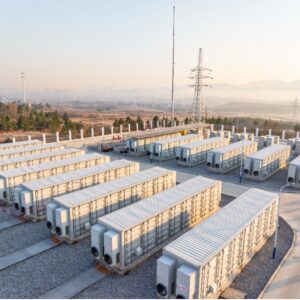
Researchers at ORNL developed a high-performance computing and physics-based modeling framework that predicts how large-scale lithium-ion battery systems age under different grid operating conditions. The tool helps optimize battery design and operation to extend system lifespan, reduce costs, and improve the performance of grid-scale energy storage before deployment.
Researchers from ORNL, Cleveland Clinic and IBM demonstrated how quantum-centric supercomputing can model the complex chemistry of molten salts used in fusion reactors, helping solve a key challenge in producing tritium fuel. Their hybrid quantum, AI, and classical computing approach could accelerate the development of self-sustaining fusion power by improving the design and testing of reactor materials before physical experiments.
Behind every self-driving laboratory at ORNL is a team most people never see. Facilities and Operations workers are building and maintaining the infrastructure that makes autonomous science possible.
Researchers from ORNL and international collaborators discovered a simpler, lower-pressure method to produce R8 silicon, a rare form of silicon with promising applications in energy storage and electronics. By compressing amorphous (glassy) silicon instead of crystalline silicon, the team created R8 more efficiently, with neutron scattering, X-ray diffraction, and computer modeling confirming the process and suggesting it could also work for other materials like germanium.