ORNL researchers have overcome a barrier to using a more affordable, dry process for manufacturing the lithium-ion batteries used in vehicles and electronic devices. The resulting batteries provide greater electricity flow and reduced risk of overheating.
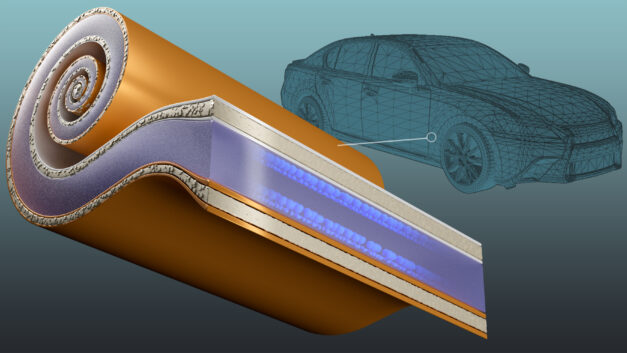
Strengthening the competitiveness of the U.S. transportation industry depends on developing domestic EV batteries that combine rapid charging with long-range performance — two goals that often conflict. Researchers at ORNL have addressed this challenge by redesigning a key battery component, enabling fast, 10-minute charging while improving energy density and reducing reliance on copper.
Electric vehicles can drive longer distances if their lithium-ion batteries deliver more energy in a lighter package. A prime weight-loss candidate is the current collector, a component that often adds 10% to the weight of a battery cell without contributing energy.
Early experiments at the Department of Energy’s Oak Ridge National Laboratory have revealed significant benefits to a dry battery manufacturing process. This eliminates the use of solvents and is more affordable, while showing promise for delivering a battery that is durable, less weighed down by inactive elements, and able to maintain a high capacity after use.
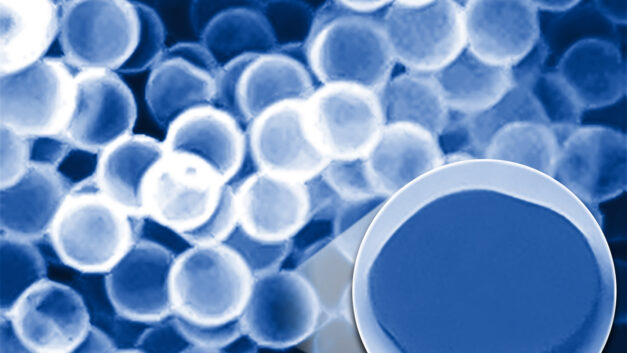
ORNL researchers demonstrated a process for producing a moisture-stable, lightweight thermal insulation material using hollow silica particles, or HSPs.
Keeping energy-concentrating mirrors at solar thermal power plants free from dirt is both labor and time intensive. Researchers at Oak Ridge National Laboratory are working to address the challenge with lab-developed superhydrophobic coating technology. “We’ve shown that applying...
An anti-soiling highly reflective and water-resistant roof coating developed at Oak Ridge National Laboratory and evaluated at Lawrence Berkeley National Laboratory has produced encouraging results. The coating based on superhydrophobic particles resulted in only 3.3 and 4.9 percent r...
A new era of electronics and even quantum devices could be ushered in with the fabrication of a virtually perfect single layer of “white graphene,” according to researchers at the Department of Energy’s Oak Ridge National Laboratory. The material, technically know...