ORNL has developed a new californium-252 processing method that reduces separation time by about a week while maintaining the same quality. As the only producer of californium-252 in the western world, ORNL is also increasing production to meet growing demand for the isotope.
ORNL and Rutherford Energy Ventures have launched FULCRA, a public-private partnership to develop shared fusion testbed infrastructure and a new model for advancing fusion technologies. The initiative will create a blueprint for shared-use facilities that help validate critical fusion components and accelerate fusion energy commercialization.
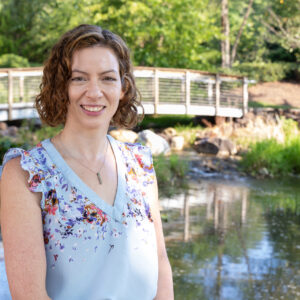
Internationally recognized radiopharmaceutical scientist Carolyn Anderson has been named the UT-ORNL Governor's Chair for Nuclear Medicine: Radiopharmaceutical Therapies, joining the University of Tennessee and Oak Ridge National Laboratory to advance targeted cancer therapies. Her appointment strengthens Tennessee's growing leadership in nuclear medicine through collaborative research, isotope science, and the development of next-generation cancer treatments.
The Department of Energy’s Oak Ridge National Laboratory scientists will lead nine and contribute to an additional 30 projects of the Genesis Mission, which aims to transform science in the U.S.
ORNL’s Strategic Fusion Priorities Material Plasma Exposure eXperiment MPEX is a next-generation linear plasma device that will answer critical questions in plasma-material interactions and develop robust materials for plasma-facing components. Cross-Cutting Fusion Capabilities Fusion Theory, Modeling, and Simulation ORNL is integrating core-to-wall science and engineering for fusion viability through fusion theory & modeling, tokamak physics,
ORNL uses advanced modeling, simulation and high-performance computing to help utilities, reactor developers and regulators evaluate reactor performance, safety and licensing before construction begins. These capabilities support power uprates for today's nuclear fleet and help advance next-generation reactor designs toward deployment.
Caleigh Samuels of ORNL has received the 2026 Elda E. Anderson Award from the Health Physics Society for her research excellence and contributions to radiation protection. She leads radiation dosimetry efforts at ORNL's Center for Radiation Protection Knowledge and supports national and international radiation safety initiatives.
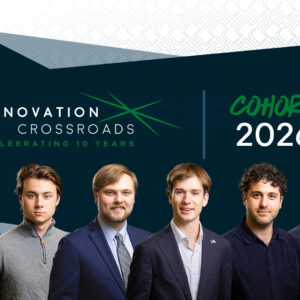
Six entrepreneurs have been selected for the next cohort of Innovation Crossroads, a Department of Energy Lab-Embedded Entrepreneurship Program node based at Oak Ridge National Laboratory. The program provides energy-related startup founders from across the nation with access to ORNL’s researchers, facilities and technical expertise, as well as connect them with experts, mentors and networks to accelerate their efforts to take their promising ideas to the marketplace.
Four summer interns at Oak Ridge National Laboratory have varied career goals, but they're finding the hands-on experiences they need under the same mentor and her group.
Researchers from ORNL, Cleveland Clinic and IBM demonstrated how quantum-centric supercomputing can model the complex chemistry of molten salts used in fusion reactors, helping solve a key challenge in producing tritium fuel. Their hybrid quantum, AI, and classical computing approach could accelerate the development of self-sustaining fusion power by improving the design and testing of reactor materials before physical experiments.
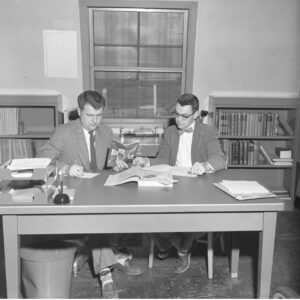
Sam Hurst was a pioneering ORNL physicist and inventor who helped develop resistive touchscreen technology, laying the foundation for the touchscreens used in modern devices. He earned more than 30 patents, founded four companies, and played a key role in strengthening the long-standing partnership between ORNL and the University of Tennessee.
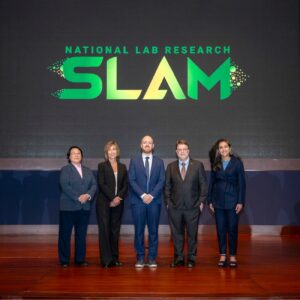
Bryan Conry, a postdoctoral researcher at ORNL, represented ORNL at the Department of Energy’s 2026 National Lab Research SLAM, where he explained his research on TRISO nuclear fuel in a three-minute presentation for policymakers, stakeholders and the public. Conry highlighted how his work uses X-ray computed tomography to study fuel particles without damaging them and said the competition strengthened his science communication skills by helping him connect technical research to real-world impact.