Click here for static version. What if one answer to the supply crisis isn’t buried in a mine shaft, but growing quietly in a field? For too long, the United States has relied on foreign sources for most of the raw materials powering its technological future, the essential minerals in every smartphone, battery pack and
ORNL’s seventh annual Quantum Computing User Forum brought together 184 researchers, developers and industry leaders to showcase advances in quantum applications, software, and hybrid quantum-HPC computing enabled through QCUP. The event also strengthened collaborations across the quantum community and highlighted ORNL’s role in developing the technologies, software ecosystem and workforce needed to make quantum computing a practical tool for scientific discovery.
Researchers from ORNL, Cleveland Clinic and IBM demonstrated how quantum-centric supercomputing can model the complex chemistry of molten salts used in fusion reactors, helping solve a key challenge in producing tritium fuel. Their hybrid quantum, AI, and classical computing approach could accelerate the development of self-sustaining fusion power by improving the design and testing of reactor materials before physical experiments.
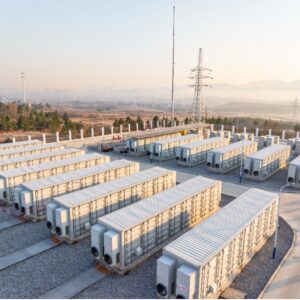
Researchers at ORNL developed a high-performance computing and physics-based modeling framework that predicts how large-scale lithium-ion battery systems age under different grid operating conditions. The tool helps optimize battery design and operation to extend system lifespan, reduce costs, and improve the performance of grid-scale energy storage before deployment.
Researchers from ORNL and international collaborators discovered a simpler, lower-pressure method to produce R8 silicon, a rare form of silicon with promising applications in energy storage and electronics. By compressing amorphous (glassy) silicon instead of crystalline silicon, the team created R8 more efficiently, with neutron scattering, X-ray diffraction, and computer modeling confirming the process and suggesting it could also work for other materials like germanium.
ORNL developed JACC, an open-source framework that enables Julia applications to run efficiently on CPUs and GPUs from multiple hardware vendors using a single codebase. The software improves performance portability for high-performance computing systems and reduces the need for architecture-specific code.
ORNL had a major presence at the 2026 AI+ Expo for National Competitiveness with multiple ORNL researchers presenting and demoing their latest work. Hosted by the Special Competitive Studies Project, the event brought together leaders from technology, academia, industry and government to discuss the rapidly evolving role of artificial intelligence in advancing U.S. innovation, energy resilience, competitiveness and national security.
DOE's ROVI initiative, led in part by ORNL, successfully demonstrated the ROVI DataHub, a secure platform that unifies energy storage data across national labs and field projects to accelerate validation and deployment of long-duration energy storage technologies. The system supports real-time analytics, AI workflows and standardized reporting for next-generation battery technologies.
An ORNL AI model can accurately predict river temperatures across the U.S., even in waterways without sensors. The system achieves about a 1.1°C median error and can estimate temperatures for all river reaches nationwide. Researchers say it could improve power plant cooling, energy reliability and environmental management.
Researchers at ORNL used a quantum computer to simulate complex hadron collisions beyond classical capabilities. The work shows quantum computing’s potential to model particle interactions despite current limitations.
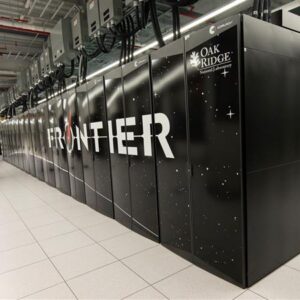
Researchers used the world’s fastest supercomputer for open science to train an artificial intelligence model that captures magnetic turbulence within a plasma in unprecedented detail. Results from the model could support research ranging from modeling a supernova to building the next generation of nuclear fusion reactors.
Adrian Sabau, a computational materials scientist at ORNL, has received the Materials Processing & Manufacturing Division (MPMD) Distinguished Service Award from The Minerals, Metals & Materials Society (TMS), recognizing his sustained contributions to the field and service to the professional community.