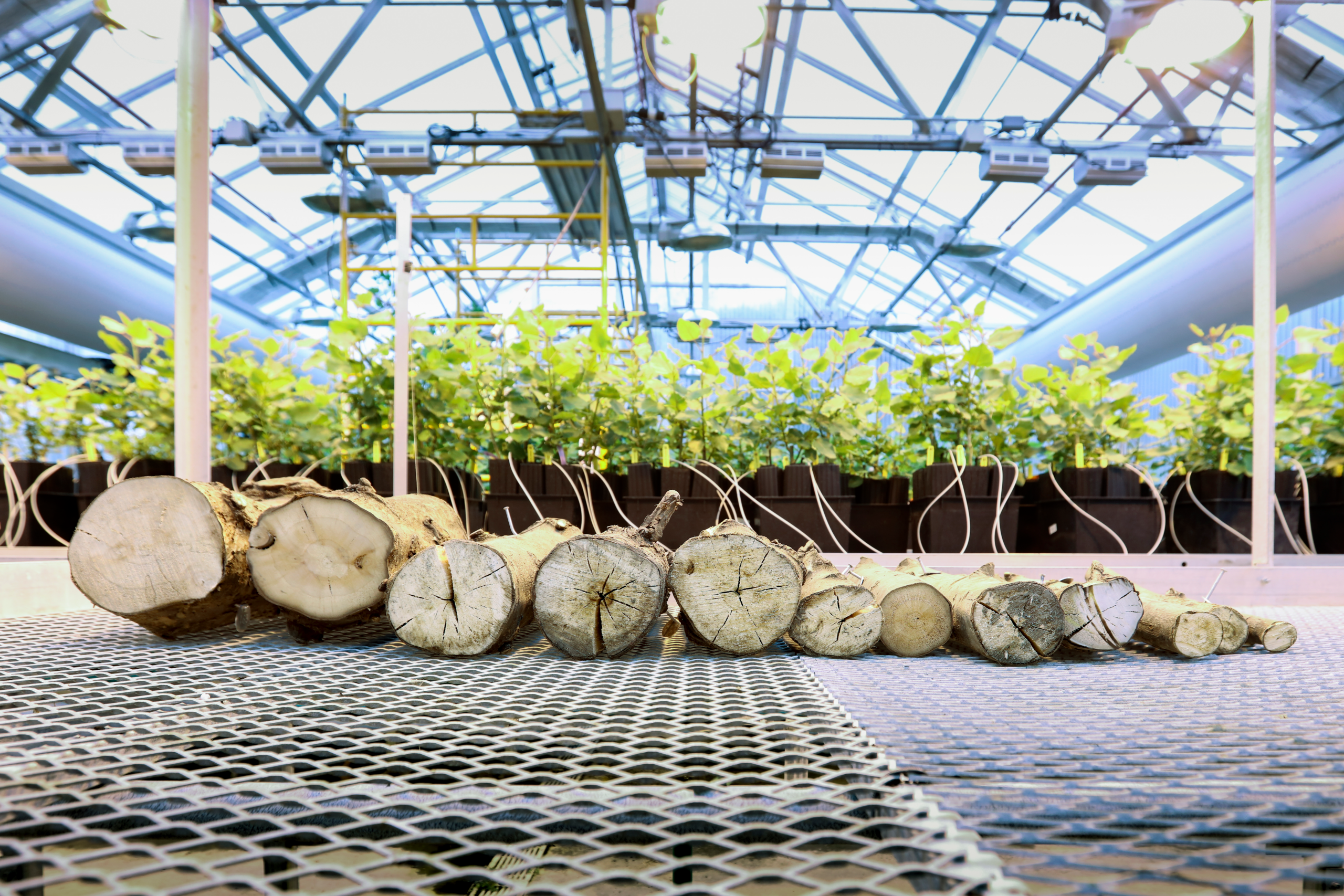
Growing the Nation's Bioeconomy
Scientists and engineers at Oak Ridge National Laboratory (ORNL) are applying a range of expertise and big science tools to assess the nation’s biomass resources, develop biobased chemicals, create new plastics that are recyclable on demand, and advance energy security for transportation sectors such as aviation, marine, and rail.
ORNL’s bioenergy technologies research brings together experts in agricultural economics and engineering, computational science, environmental science, fuels and engines technology, materials science, and synthetic biology. Researchers work closely with partners in industry, other federal agencies, and academia to ensure analyses and technologies are relevant and scalable to support the nation’s growing bioeconomy.
This ORNL research is funded primarily by the DOE Bioenergy Technologies Office with additional support from Laboratory Directed Research Funds, US Department of Agriculture, and industry partners. Researchers with ORNL’s Bioenergy Technologies Program also collaborate frequently with the Center for Bioenergy Innovation, which is funded by the DOE Office of Science.
Scaling Technologies and Enabling Commercial Viability
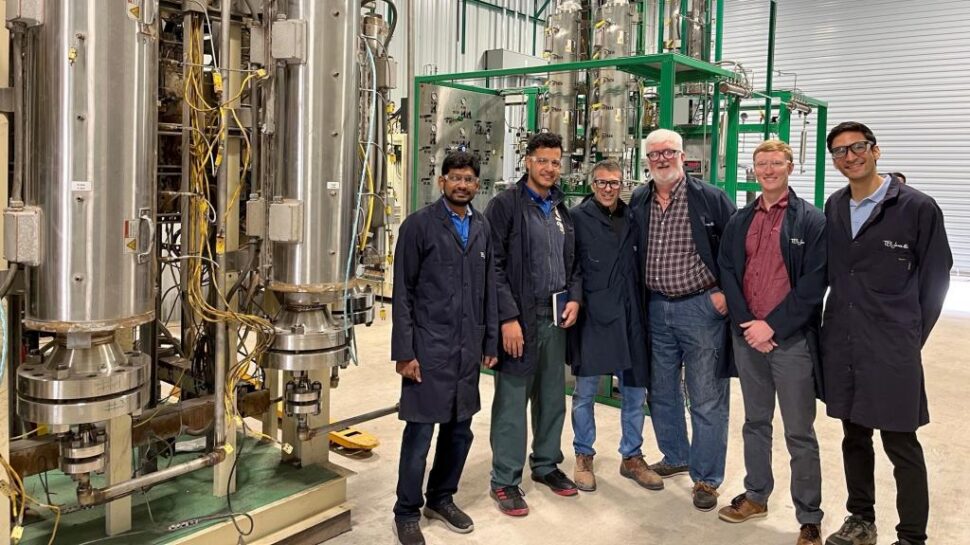
ORNL scientists apply advanced materials science capabilities to understand causes of wear in production equipment and to evaluate the compatibility of new and existing materials. Our researchers collaborate closely with industry, providing computational modeling across scales from the atomic to full-size reactors to optimize processes and boost commercial production.
Recent Impacts
Upgrading ethanol for use in transportation sectors—Supported scaling of ORNL-developed technology licensed to Vertimass LLC that converts ethanol into higher-grade hydrocarbons for use in aviation, marine shipping, and diesel fuels. The EPA approved the registration and use of this low-cost, biomass-derived gasoline blendstock
Addressing industry needs—Leading the DOE Bioenergy Technologies Office’s Consortium for Computational Physics and Chemistry, which leverages modeling and simulation capabilities to help industry optimize processes and resolve technical barriers to deployment
Scaling industrial processes—Provided computational modeling and simulation capabilities, enabling industrial partner Pyran to scale its reactor technology by 1,000 times in a single step
Improving materials—Evaluated biomass processing equipment and developed affordable solutions that decreased equipment wear and provided more consistent feedstock processing

Quantifying Biomass Resources
ORNL researchers lead comprehensive resource assessments known as the Billion Ton studies to inform decision makers about opportunities to advance energy security by leveraging biomass resources locally, regionally, and nationally. We apply expertise in biomass engineering and logistics to develop national-scale energy crop production strategies that advance best practices, build rural economies, and strengthen domestic supply chains.
Recent Impacts
Assessing biomass resources—The U.S. Department of Energy (DOE) Bioenergy Technology Office’s (BETO) 2023 Billion-Ton Report (BT23) is now available. This report is the fourth in a series of comprehensive national reports led by ORNL, assessing potential biomass production capability in the United States
Best use of biomass—Developed a new tool to evaluate the best use of national biomass resources to maximize carbon reductions at minimal cost
Biomass benefits—Showed that using less-profitable farmland to grow bioenergy crops such as switchgrass promotes energy security and boosts biodiversity. Quantified and confirmed the significant economic benefits of a thriving bioeconomy on disadvantaged counties in the nation

“We are studying ways to more economically and reliably produce, deliver, and use forest, agricultural, and waste resources to expand the US bioeconomy while preserving ecosystem services.”
Erin Webb
Bioresource Science and Engineering Group Leader
Converting Biomass to Fuels and Products
ORNL researchers develop new catalysts and conversion technologies that increase the efficiency and enhance the economics of producing biofuels and biochemicals. We work with microbes to convert waste carbon sources from biorefineries and other industries into valuable chemicals for use in plastics and a wide variety of consumer products.
Recent Impacts
Biobased options for marine shipping—Leading a multi-lab effort to evaluate the use of bio-intermediates as a suitable maritime fuel. Achieved good blend stability of marine fuels when using mixes that contained up to 50% very low sulfur bio-oil
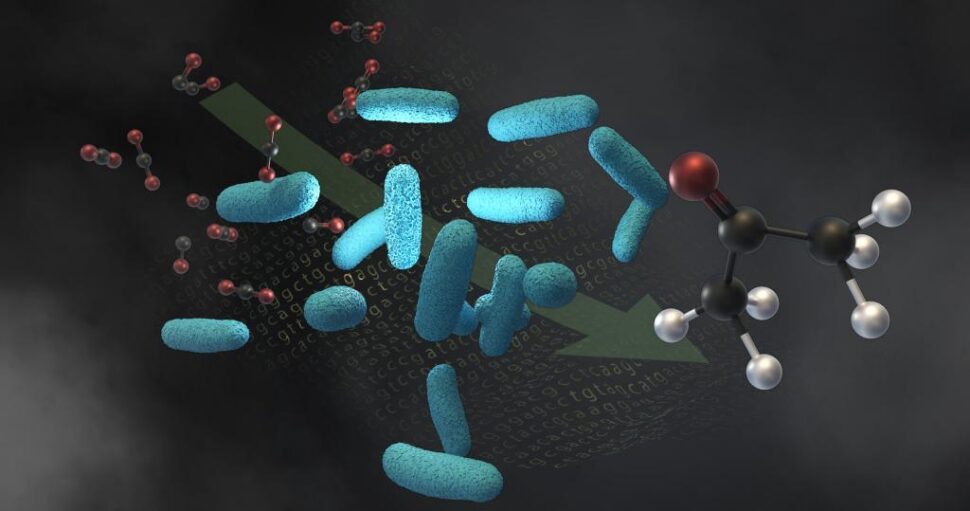
Converting carbon into chemicals—Engineered microbes to turn industrial emissions into widely used chemicals that are the basis of thousands of products, from fuels and solvents to acrylic glass and fabrics
3D printing with biomaterials—Created biocomposites that have 75% of the strength at 50% of the cost of typical carbon fiber–reinforced plastics used for large-scale additive manufacturing
Upcycling plastics—Developed new chemical and biological methods to break down and upcycle mixed plastics into valuable bioproducts