
Welcome to the Advanced Plant Phenotyping Laboratory
The Advanced Plant Phenotyping Laboratory (APPL) at Oak Ridge National Laboratory is a cutting-edge research facility at the forefront of decoding, designing, and deploying the crops of tomorrow.
Explore the Facility


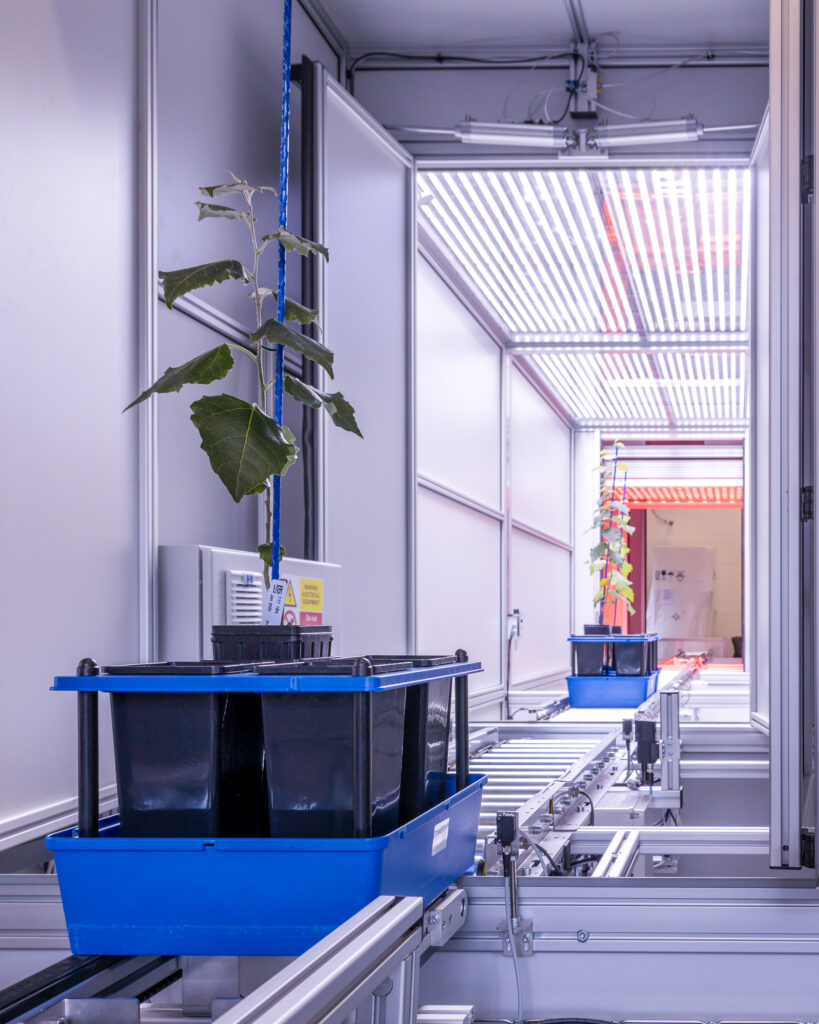
The Advanced Plant Phenotyping Laboratory (APPL) at Oak Ridge National Laboratory is a cutting-edge research facility at the forefront of decoding, designing, and deploying the crops of tomorrow. Leveraging state-of-the-art imaging technologies, artificial intelligence, and automation, APPL accelerates scientific discoveries that improve crop resilience, increase yields, and support abundant, secure, and affordable domestic energy for the nation.
The system offers one of the most diverse suites of imaging capabilities for plant phenotyping in the world, allowing research teams to see beyond the human eye to uncover critical insights into plant genetics and performance.
The demand for better crops is growing. Scientists need plants that are more resilient, grow larger, require fewer resources, and efficiently convert into valuable fuels and chemicals. Measuring multiple characteristics and processes across plant populations demands both speed and precision. With the ability to process up to 500 large plants along a 700-ft automated track, APPL delivers high-throughput data with greater resolution than traditional manual methods to enable high-precision phenotyping and advance research at an unprecedented pace.


The automated system operates around the clock so researchers can observe minute changes in plant growth and function, identifying key genes and evaluating crop modifications in real time. Sophisticated imaging capabilities and AI-powered analysis helps scientists create detailed profiles of plant traits, which leads to breakthroughs in:
Better crops: Engineering plants that grow taller and convert more efficiently into fuels, materials and chemicals.
Drought resistance: Studying how plants respond to water scarcity to improve stress resilience.
Nutrient efficiency: Optimizing plant metabolism for better growth with fewer inputs.
Collaborating with the Department of Energy’s Center for Bioenergy Innovation and the Plant-Microbe Interfaces Scientific Focus Area, APPL integrates its advanced capabilities with ORNL’s expertise in supercomputing and neutron science to extract valuable insights from billions of data points, driving unparalleled progress in plant science.
How ORNL is Using AI & Automation to Revolutionize Plant Science
The Advanced Plant Phenotyping Laboratory at Oak Ridge National Laboratory accelerates scientific discoveries that improve crop yields, enhance plants’ ability to capture critical minerals and materials, and support secure, abundant, and affordable domestic energy.
Accelerating AI-Driven Biodesign for U.S. Critical Minerals Supply
As part of the Orchestrated Platform for Autonomous Laboratories (OPAL) initiative, scientists are building on APPL’s capabilities to develop an automated science hub in which self-directed AI agents continuously study and optimize how poplar trees capture rare earth elements — minerals vital for powering U.S. high-tech industries.
By monitoring and analyzing plant traits using APPL’s advanced imaging stations and AI foundation model, these agents will automatically adjust growing conditions in real time, fast-tracking insights for the development of living systems to extract critical minerals.
APPL’s data and discoveries will seamlessly flow and connect with other DOE national laboratories through OPAL’s shared data systems. The result is a national powerhouse of scientific excellence aimed at accelerating discoveries for America’s bioeconomy and critical materials supply chain.

State-of-the-Art Imaging Capabilities
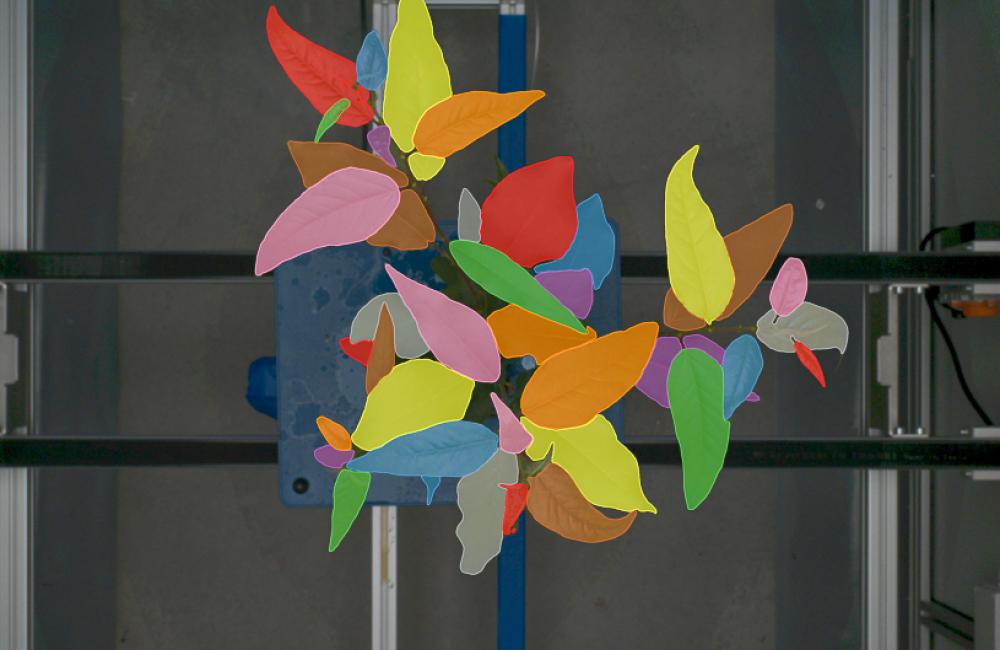
Segmentation Imaging
Measures size, shape, and height to model plant architecture.

3D Plant Modeling
Analyzes plant morphology and growth dynamics.

Chlorophyll Fluorescence
Measures photosynthetic activity and stress responses.

Thermal Imaging
Detects plant surface temperature and transpiration.
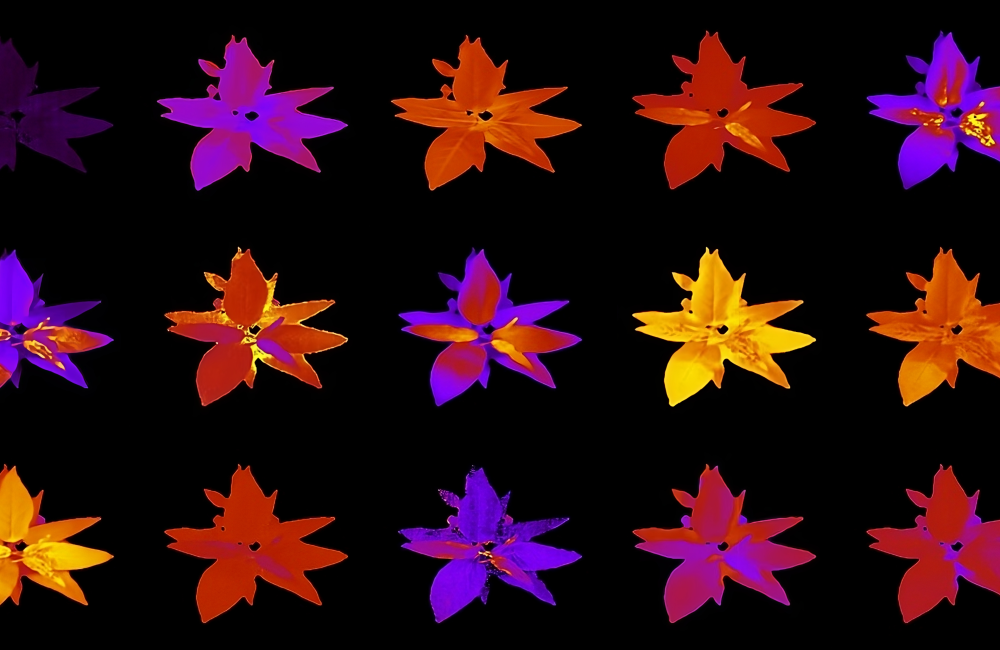
Hyperspectral Imaging
Captures plant biochemical composition beyond visible light.

RGB Imaging
Creates a digital twin for precise growth tracking.
APPL’s new belowground imaging capabilities are driving the future of bioenergy and biotechnology innovation. Using standard analytics and AI-based approaches to visualize root systems and track water movement through soil layers, scientists can bioengineer hardier crops, understand beneficial plant-microbe interactions, and enhance plants that can naturally extract critical minerals from the soil.
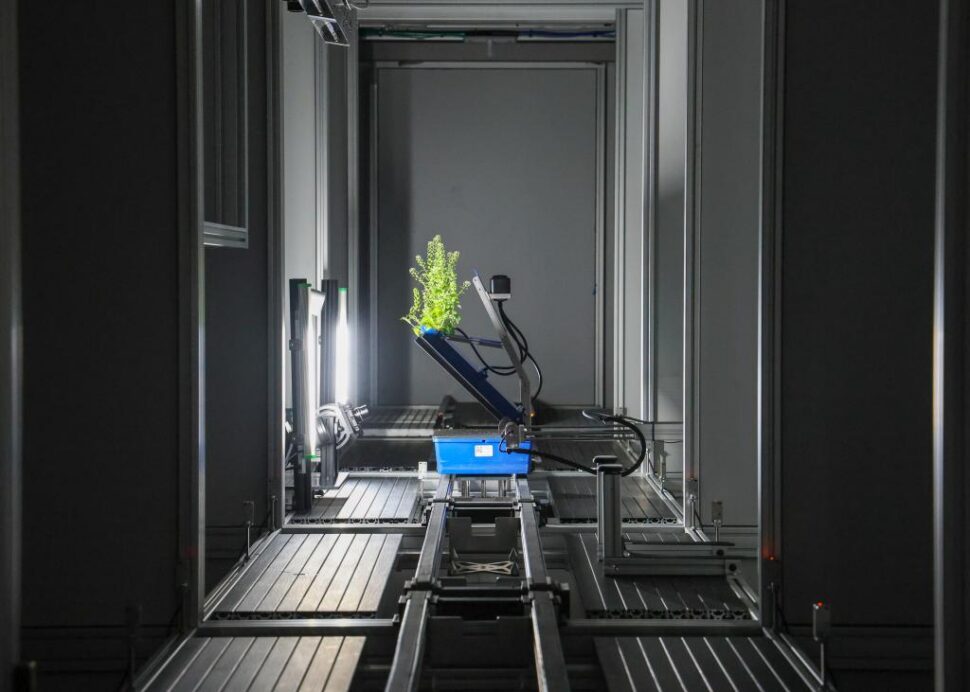
The combination of state-of-the-art computational approaches and unique infrastructure, which includes 500 rhizoboxes, will help scientists automatically capture 24/7 time-series measurements both above and belowground, allowing the system to create a comprehensive dataset for each plant. Scientists can then leverage the computing capacity of the Frontier exascale supercomputer to analyze and process these vast datasets.

Insights from APPL’s revolutionary phenotyping research are driving innovations that could strengthen the U.S. agricultural sector. Future applications include:
- Drone-mounted sensors that can scan croplands and diagnose plant health in real time
- Automated monitoring systems that optimize water, fertilizer, and pesticide use
- Enhanced crop breeding strategies that improve resilience and yield
These advancements mean higher productivity, lower costs, and more efficient resource use for farmers, enabling more abundant domestic energy production and strengthening food security across the nation.
APPL in Action
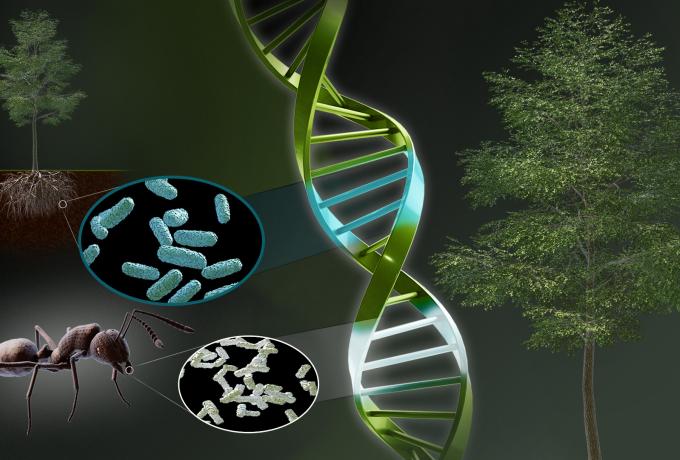
APPL was instrumental in the landmark discovery of Booster, a gene that increases plant height by up to 200% and plays a crucial role in photosynthesis.
Using APPL’s advanced imaging and automation, scientists rapidly measured leaf size changes in poplars expressing Booster in a greenhouse setting. The research team identified the gene’s unique origins: one segment comes from bacteria in the poplar root system, another from an ant that cultivates a fungus known to infect poplar, and the third from Rubisco, a protein essential for photosynthesis. Scientists have long sought ways to increase Rubisco levels in plants to enhance crop yield and carbon absorption.
The Booster gene could significantly improve bioenergy crop yields without requiring more land, water, or fertilizer. If it functions similarly in food crops, it may help reduce food scarcity around the world.

“We have the opportunity to visualize, across various spectra, plants as they develop and grow under normal and stressed conditions. We’re seeing cues and signals we’ve never been able to detect before, indicating shifts in plants’ physiology and morphology due to conditions like drought stress or pathogen attacks. The potential to predict changes before they are visually apparent is exciting. This is unexplored territory.”
Gerald Tuskan
Director, Center for Bioenergy Innovation